


Paris, July 05: Paris just wrapped a bustling men’s fashion week featuring more than 80 participants over six days, and is gearing up for a haute couture week with some 30 houses on the schedule from July 4 to 7.
The revered fashion executive spent eight years leading French fashion’s governing body.
Swati Bhat
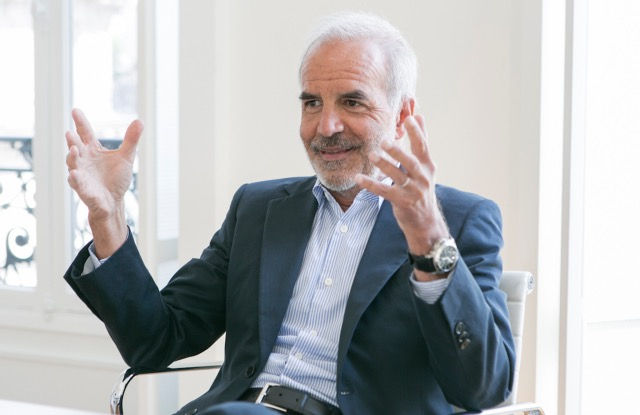
Portrait of Ralph Toledano, President of Fédération de la Haute Couture et de la Mode
For Ralph Toledano, who is stepping down as president of the Fédération de la Haute Couture et de la Mode after an eventful eight-year term, it’s confirmation of his convictions that Paris is the “indisputable capital of fashion,” and that runway shows, framed by an organized and curated fashion week, remain “indispensable” for creative brands and designers.
“Fashion weeks create competition between brands, while motivating designers to give their best,” he explained in an interview. “The show is such a catalyst for this that, the closer it gets, the more creative the design teams become.” And that energy reverberates throughout the entire fashion house. “It is a unique moment of intensity and emotion, when everyone comes together to support the design team and make the show a success,” said Toledano, who over the years has led brands including Karl Lagerfeld, Guy Laroche and Chloé.
What’s more, fashion week “is a unique moment of excitement at a specific time — gathering fashion experts to see, feel, touch, the results of several months of hard creative work in terms of garments, bags, shows, jewelry, beauty,” he said. “Everyone appreciates the workmanship. The reality is that the fashion world is thrilled to meet again in Paris for physical fashion weeks.” One of the industry’s most accomplished and revered executives, Toledano completed three terms at French fashion’s governing body, making him ineligible for reelection. He leaves on a high note, and with only one piece of advice for the federation in the years ahead: “Raise the bar!”
Toledano was president of Puig’s fashion division, overseeing houses including Carolina Herrera, Nina Ricci and Jean Paul Gaultier, when he was elected president of the federation in 2014. He currently serves as a senior partner at Neo Investment, which has stakes in Victoria Beckham, Vuarnet, Valextra, Miller Harris, Alain Mikli and luxury brands in the food and design categories. Toledano is also chairman of Victoria Beckham; he sits on the boards of the Institut Français de la Mode, and the Association Villa Noailles, which organizes the Hyères Festival, and he remains president of the Chambre Syndicale de la Haute Couture until September.
“Operating a business has been instrumental in understanding the services or initiatives the federation should provide,” he said. “I would say it’s a good company.” Toledano said he handled his ambitions for the federation, which counts about 100 members, with the zeal and ingenuity of an entrepreneur. “The federation has totally changed its scale. It was long seen as the place you went to get a good slot on the show calendar. Now the federation is present in every aspect of fashion,” he said. Its promotion and defense of the industry, voiced in Paris and in Brussels, means it is now taken seriously by various levels of government. French President Emmanuel Macron, for example, hosted two gala evenings at the Élysée Palace for the fashion industry in recent years, inviting all the top designers in town for a meal, photo op and networking.
Back in 2014, Toledano and his executive committee at the time — Saint Laurent’s Francesca Bellettini, Chanel’s Bruno Pavlovsky, Hermès’ Guillaume de Seynes, and LVMH Fashion Group’s Sidney Toledano, who is no relation — identified six priorities, with reinforcing Paris’ preeminent position at the top of the to-do list. Another was creating a fashion school in Paris to rival the likes of Central Saint Martins in London, which came closer to reality in 2019 with the amalgamation of the École de la Chambre Syndicale de la Couture Parisienne and France’s IFM management school to create the Institut Français de la Mode, uniting business, design and savoir-faire studies. “The early indicators are extremely promising, and we are now even more committed to making it the world’s preeminent fashion school,” Toledano said, recounting how Chanel, Hermès, Kering and LVMH Moët Hennessy Louis Vuitton, along with Compagnie Financiere Richemont and Lanvin, ponied up millions to make the new IFM a reality. He is also particularly proud of communicating efficiently about the federation’s accomplishments; boosting female representation at the Chambres Syndicales du Prêt-à-Porter; setting up strict and transparent governance, and strengthening support systems for emerging brands. “Personally, I was determined to open the doors of the federation, envisioning it as the house of fashion, a house of and for fashion people,” he said. “With Pascal Morand, executive president of the federation, and the dream team he built, we implemented our program.” The federation introduced a wide range of services for emerging brands, financial aid through its support fund, and a showroom known as Sphere, held four times a year with the backing of industry body DEFI. “Going forward there will be a fixed budget for designers,” Toledano said. While the amount is confidential, the services at the disposal of promising brands include digital showrooms, help with shooting look books, access to logistics planning, and training courses. “They have to learn to create a business plan,” Toledano said. “It’s the first thing they are asked by potential investors.” He also described Serge Carreira, who came on board in 2019 to head the federation’s emerging brands initiatives, as “a permanent mentor” to a host of young designers. One of the differentiators of Paris Fashion Week® has been its curated, selective approach in deciding who gets on the official calendar. Toledano said the federation now invites a range of experts — including retailers, showrooms and editors — to offer their perspectives on who should make the cut. “We furthered Didier Grumbach’s efforts in elevating and evaluating PFW® criteria: creativity, craftsmanship, innovation, openness to foreign designers, inclusivity,” he said, referring to his predecessor at the federation.
Toledano said he accepted to run for a third term as non-executive president to see through the IFM transition. “We had already officially announced the merger of the École de la Chambre Syndicale and the IFM, but then we needed to define how the fashion and craftsmanship school would operate, build the bachelor program and fund it. In the end, it was a real entrepreneur initiative, but we did it,” he said. The second reason for staying was not planned: Helping to steer the governing body through the coronavirus pandemic. “The French industry reacted remarkably to the pandemic,” he marveled. “When it started, as the country significantly lacked masks and sanitizing gel, the industry converted its factories and workshops to produce them freely, a gesture that was extremely well-received by caregivers.” Toledano noted that France’s major luxury groups turned down furlough protection offered by the government, and the “brands showed an impressive resilience and an immediate reactivity, digitalizing their operations at an amazing pace. “Elsewhere around the world, a high number of jobs were eliminated, whereas the French fashion industry avoided this, and rebounded with excellent results,” he added. “In hindsight, there are always things that could have been improved, but I do not see any important issue that was not dealt with. “Very fortunately, we were able to show in February and March in 2020, however when the situation worsened, the executive committee decided to cancel the men’s and haute couture shows scheduled in June and July,” he recalled. “When we drafted the press release with the announcement, we decided to remain positive and mentioned that we were exploring alternative options.” Once that was put in writing, the federation had to deliver. Everyone buckled down to develop a digital showcase and six weeks later, the first online fashion week in Paris was under way. In Toledano’s view, Paris has retained its stature as the preeminent international fashion week by remaining true to its DNA, namely “creativity, workmanship and innovation.” Another is welcoming designers of more than 20 different nationalities, including ones from Japan, the United Kingdom, the U.S., Belgium, Italy, Spain, Germany, Northern Europe, Middle East, and more recently, China and Africa. The women’s fashion week in Paris now stretches over nine days, with between 90 and 100 participants. “We must remain extremely discerning in the selection of fashion week participants,” he said, also citing the need to establish “the best possible infrastructure and services for all visitors coming to Paris for the fashion weeks.”
Toledano balked at a question about the competition posed by other capitals such as Milan, New York or Shanghai. “We do not think in terms of competition: We are simply driven by the idea of making Paris Fashion Week® stronger season after season,” he said. Toledano highlighted a “fascinating rebound” in haute couture week versus 15 years ago, when the federation had to pad out the high fashion week with ready- to-wear shows to make it viable. “Now we have a lot of demand from young designers, very young designers, who want to start their careers with haute couture,” he enthused. “Why? Haute couture means more autonomy in creativity. When you work for big companies, marketing is also important, so you have to design in that shape, it has to be in this material — it has to fit a collection plan. “That makes lot of young people want to do it,” he said of couture, enthusing that “because they’re young, they bring new technologies, new approaches.” Asked which developments in fashion history he observed over his eight-year term, he cited many: “Gender fluidity, openness to new cultures, the never-ending collaborations, the movement of artistic directors, digitalization across all the sectors of the industry, the imperatives of sustainability and inclusivity.”
The Fédération de la Haute Couture et de la Mode is holding its general assembly on Friday and is schedule to elect a new president. The leading candidate is Bruno Pavlovsky, president of fashion and president of Chanel SAS. He already sits on the executive committee of French fashion’s governing body.


