top of page
The Communiqué News

New Delhi [India], August 16 (PNN): The man who gave us the courageous film "The Kashmir Files", Vivek Agnihotri, appeared as a chief guest at the launch of the first look of this upcoming movie which ensures to celebrate Unity In Diversity, giving a new swadeshi rebranding to the word Indians, called "Bharateeyans".

ree

The film's Teaser was out on the 13th of August, 2022; the Bharateeyans is a Hindi Bollywood Debut by the well-known Telugu writer Deen Raj who has written glorious films like Eeswar- Prabhas's debut movie, Premante Idera, KaliSundam Raa starring Daggubati Venkatesh and many more. On talking about the movie, Deen Raj said, "On the eve of independence day, I humbly pay tribute to the spirit of our great land Bharat, and proud to showcase our first look and cast from each corner of the country." Bharateeyans is being produced by a Bharat American Surgeon, Dr Shankar Naidu Adusumilli, on asking him about the movie, he said, " Bharateeyans - is close to my heart, a subject which makes me connect back with my roots and my values. It's an earnest tribute to every Indian with a solid message on Patriotism and perseverance. Vivek Agnihotri, who launched the teaser at the event, added, "I have loved the unique way the names of characters have been kept in Bharateeyans. I have always wondered if someone has the guts to do something like this; I have never had the guts to do anything like this. The cast looks fresh, nice, and passionate. I know the burden of carrying a young cast on your shoulder; I feel it's been brilliantly tackled. I love the name 'Bharateeyans,' and I feel it's the responsibility of the youth to take the country forward." This motion epic has an ensemble cast that celebrates diverse talents from varied states across the Nation, like Nirroze Putcha, Subha Ranjan, Sonam Thendup Barphunga, Samaira Sandhu, and Peden O Namgyal, and Rajeshwari Chakraborty. Bharateeyans, this mainstream Bollywood movie also has talented technicians from the south industry; Action of the film is being directed by Judo Ramu, who's known for his work in multiple industries like Kannada, Telugu, Oriya, Bengali; DOP is Jayapal Reddy Nimmala and Music by Satya Kashyap. Bharateeyans, like its title, become the First Pan India packed with talents across our Motherland and has been filmed at various locations across the Nation, including the illustrious Sikkim.

This story is provided by PNN. TC will not be responsible in any way for the content of this article. (PNN)


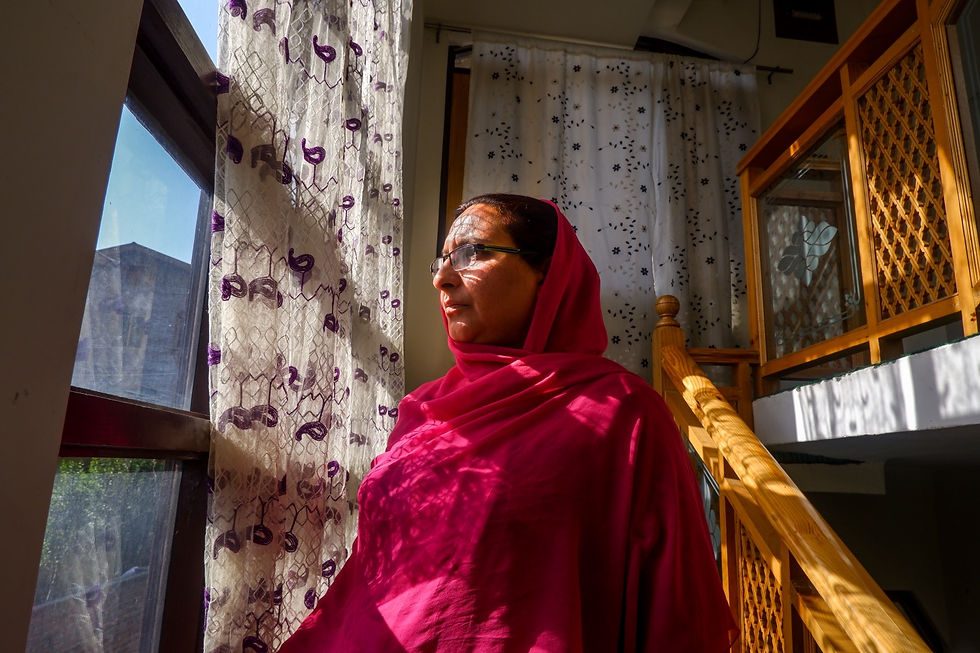
As a child, Masrat Jan, now 47 years old, would wait desperately for the month to end. That was when her mother along with her four siblings would travel to her father’s home in Srinagar, the summer capital of Indian-administered Kashmir, to visit her grandparents.


ree

There, Jan was able to do what she loved most: play with colors.

Her grandfather ran a Karkhana — a workshop in which he and his workers spent hours drawing papier-mâché art, a craft where artisans mold various shapes out of mashed paper, wood, and other materials. After smoothing, or pishlawun, the objects are then decorated with different motifs.

Jan was mesmerized by the polished papier-mâché items like Santa Claus, Easter eggs, flower vases, elephants, cats and many others which would later be exported, mainly to Europe and the United States.

Papier-mâché has been practiced for centuries by Kashmiri artisans like Jan’s grandfather, who make their living from the craft. But, in recent years, just as Kashmiri papier-mâché has gained recognition in museums across the world, the renowned and beloved art has faced extinction.

The number of papier-mâché artisans has shrunk due to meager (and shrinking) wages, widespread health issues, and a lack of government support. Yet, Jan and her colleagues in Kashmir are determined to ensure the craft survives.

Papier-Mâché’s Long History In Kashmir

While papier-mâché is a French phrase (translating literally to “chewed paper”), the craft in Kashmir is traditionally dated to the 15th century, when historians argue it was introduced from Persia during the reign of Kashimiri king, Sultan Zainul Abidin.

Some historians however suggest it was actually introduced some 50 years earlier by Persian Sufi saint Mir Syed Ali Hamadani, who arrived in Kashmir in 1372, along with hundreds of his disciples and companions. Hamadani is credited with organizing the Muslim community in Kashmir and bringing along artisans who taught papier-mâché to residents of the valley.

Most practitioners, like Jan’s grandfather, learned the art from the previous generation, who can trace their roots all the way to Hamadani’s disciples.

Jan, however, only began practicing seriously at 19, due, in part, to Kashmir’s fraught political situation. In the 1980s, a violent uprising against Indian rule led to a prolonged and bloody conflict pitting Kashmiri separatists against the Indian Army; thousands of Kashmiris were killed, injured, or disappeared between 1989 and the early 2000s, according to human rights groups. The conflict forced thousands of Kashimiris inside their homes as the government enforced curfews, while separatist groups often called for days-long shutdowns in protest of alleged rights abuses by the army.

Though Jan had been focused on her studies due the insistence of her father, a government officer, she found herself newly ignited by her childhood passion once stuck inside by the curfews. By her twenties, Jan had become a master artist, capable of producing intricate scenes like the Mughal Empires courts or Kashmir’s diverse variety of animals and plants.

“This work not only earns me livelihood and respect, it is also a major source of my spiritual health,” Jan told “This place where I work is like a shrine for me and the work that I do is sort of a prayer.”

Jan’s husband, Maqbool Jan, is also a master papier-mâché artist, having won numerous national and international awards, including the UNESCO Seal of Excellence Award in 2008.

Far more typical however is Haleema, a 55-year-old woman from the Budgam district in central Kashmir. Haleema first began working in papier-mâché in her father’s factory at the age of 9. She recalls drawing a flower on a papier-mâché ball and quickly becoming a pro. For Haleema, practicing the art is a duty.

“It is not something that I do for a living, but it is something that I do as payback. I don’t want this art to die.” Haleema told, as she explained the emotional connection she has with the art.

A staunchly religious woman, Haleema was diagnosed with stage-3 stomach cancer in 2014. She said she found that the art gave her courage as she battled for her health.

“Couple of months after my cancer recovery, I started spending time on art again. But this time my focus was on mostly Islamic art,” she said. Haleema said that she primarily engraves Quranic verses and other holy names on her paper mache work now.

Despite the best efforts of dedicated artists like Masrat Jan, Haleema, and Maqbool Jan – who himself has trained over 50 practitioners – papier-mâché faces numerous challenges to its survival in Kashmir.


A Yayoi Kusama pumpkin, Rashid Johnson mosaic, and a monumental Jeff Koons sculpture—in the likeness of an endangered marine mammal—are among the 40 new and commissioned public artworks to be installed throughout Doha in Qatar, the state body Qatar Museums announced today.

ree

Damien Hirst, The Miraculous Journey, 2013.

PHOTO COPYRIGHT IWAN BAAN. COURTESY OF QATAR MUSEUMS


The mass public art program marks an ambitious fall season for the Gulf nation, with much-anticipated events including the FIFA World Cup football tournament and the inauguration of several new museums.

Some sculptures have already been installed, such as Untitled (Trench, Shafts, Pit, Tunnel and Chamber), 1978, by Bruce Nauman, in Msheireb Downtown Doha, Tom Claassen’s Falcon (2021) outside the Hamad International Airport, and Two Orchids (2015) by Isa Genzken near the National Theater, in what the government is calling its new “outdoor museum.”

The full artist list is a wide range of living and dead international, regional, and Qatari artists. The newly installed works include Maqam I, Maqam II, Maqam III by Lebanese artist Simone Fattal, three conical granite sculptures reminiscent of blue dunes, a nearly 100-foot-long banner by American conceptual artist Lawrence Weiner at Stadium 974, and a light installation by Iraqi artist Adel Abidin projected on the facade of Mathaf.

The public art program is overseen by Sheikha Al Mayassa bint Hamad bin Khalifa Al Thani, the chairperson of Qatar Museums. Once completed, it will rival the most prominent sculpture initiative in the Gulf, Saudi Arabia’s open-air sculpture museum on Corniche in Jeddah, which holds works by Hans Arp, Alexander Calder, and Maha Malluh.

See a selection of the new public artworks in Doha here.


bottom of page